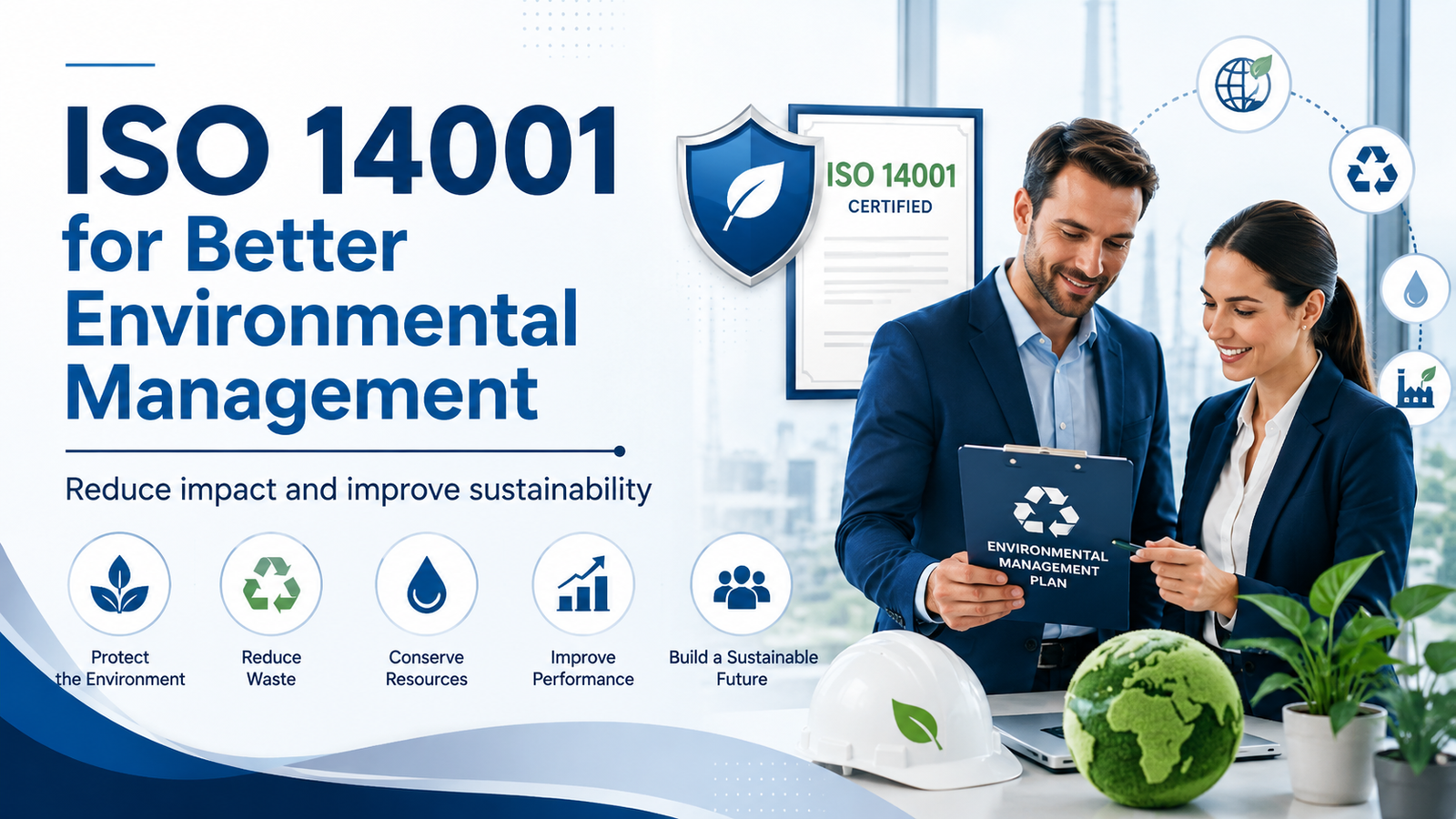
ISO 14001 for Better Environmental Management
Environmental performance has become an important business issue.
Customers, regulators, supply chains, employees, and other stakeholders increasingly expect organizations to manage their environmental responsibilities in a clear and measurable way.
ISO 14001 provides a structured framework for establishing an environmental management system.
What Is ISO 14001?
ISO 14001 is the internationally recognized standard for environmental management systems.
The current edition, ISO 14001:2026, was published in April 2026. It helps organizations manage environmental impacts, legal obligations, resources, waste, environmental risks, and improvement objectives.
The standard can be used by organizations of different sizes and sectors.
What Is an Environmental Management System?
An environmental management system, or EMS, is a structured method for controlling how an organization interacts with the environment.
It may cover:
- Energy consumption
- Water use
- Waste generation
- Air emissions
- Chemical handling
- Noise
- Transportation
- Packaging
- Resource efficiency
- Emergency situations
The management system helps the company identify significant environmental aspects and establish appropriate controls.
Identify Environmental Impacts
The first step is understanding how the organization’s activities, products, and services affect the environment.
For example, a company may create environmental impacts through:
- Electricity use
- Fuel consumption
- Production waste
- Plastic packaging
- Water discharge
- Hazardous materials
- Vehicle emissions
- Supplier activities
The company evaluates these impacts and determines which ones require stronger control.
Improve Environmental Compliance
Organizations must identify environmental obligations that apply to their activities.
An ISO 14001 management system helps the company organize these obligations, assign responsibilities, maintain evidence, and evaluate compliance.
Certification does not replace legal compliance. It provides a system for managing compliance responsibilities more effectively.
Reduce Waste and Resource Use
Environmental improvement can also create business benefits.
Reducing unnecessary material use, electricity consumption, fuel use, water consumption, and waste-disposal costs can improve operational efficiency.
Organizations can establish measurable objectives such as:
- Reducing electricity consumption
- Decreasing production waste
- Increasing recycling
- Reducing packaging materials
- Improving water efficiency
- Controlling fuel consumption
Objectives should be monitored using reliable information.
Prepare for Environmental Emergencies
Some activities can create environmental emergencies, including chemical spills, fires, equipment failures, leaks, or uncontrolled releases.
ISO 14001 requires organizations to consider emergency situations and prepare suitable responses.
Preparation may include:
- Emergency procedures
- Employee training
- Spill-control materials
- Communication responsibilities
- Emergency exercises
- Incident reporting
- Corrective action
Strengthen Stakeholder Confidence
ISO 14001 certification can demonstrate that the organization has implemented a formal environmental management system.
This may strengthen confidence among customers, supply-chain partners, regulators, employees, and investors.
The company should communicate its certification accurately and avoid exaggerated environmental claims.
Leadership and Employee Involvement
Environmental management cannot be handled by one employee alone.
Senior management must provide direction and resources, while employees need to understand how their work affects environmental performance.
Employee participation can help identify practical improvements because workers often understand where waste, unnecessary consumption, or environmental risks occur.
Preparing for ISO 14001 Certification
A typical implementation process includes:
- Define the scope.
- Identify environmental aspects.
- Review environmental obligations.
- Evaluate risks and opportunities.
- Establish an environmental policy.
- Set measurable objectives.
- create operational controls.
- Train employees.
- Prepare for emergencies.
- Monitor environmental performance.
- Conduct an internal audit.
- Complete a management review.
- Correct identified issues.
- Arrange the certification audit.
Frequently Asked Questions
Is ISO 14001 only for factories?
No. Service providers, construction companies, logistics businesses, offices, healthcare providers, and many other organizations can use it.
Does ISO 14001 require zero environmental impact?
No. It requires a systematic approach to managing environmental responsibilities and improving performance.
Can ISO 14001 be combined with ISO 9001?
Yes. The two systems can be integrated to manage quality and environmental performance together.
Improve Your Environmental Performance
ISO 14001 can help your business reduce environmental risks, use resources more efficiently, and demonstrate responsible management.
Contact ISOCERT PRO to discuss ISO 14001:2026 implementation and certification preparation.

Leave A Comment